
Restaurant business insurance, the whole stack
A restaurant's stack is general liability for the front of house, property coverage for a kitchen full of heat and equipment, workers compensation once there are employees, and liquor liability the day alcohol is on the menu. The rules around all of it are set state by state and enforced county by county, which is why the state pages on this site exist.
What coverage a restaurant needs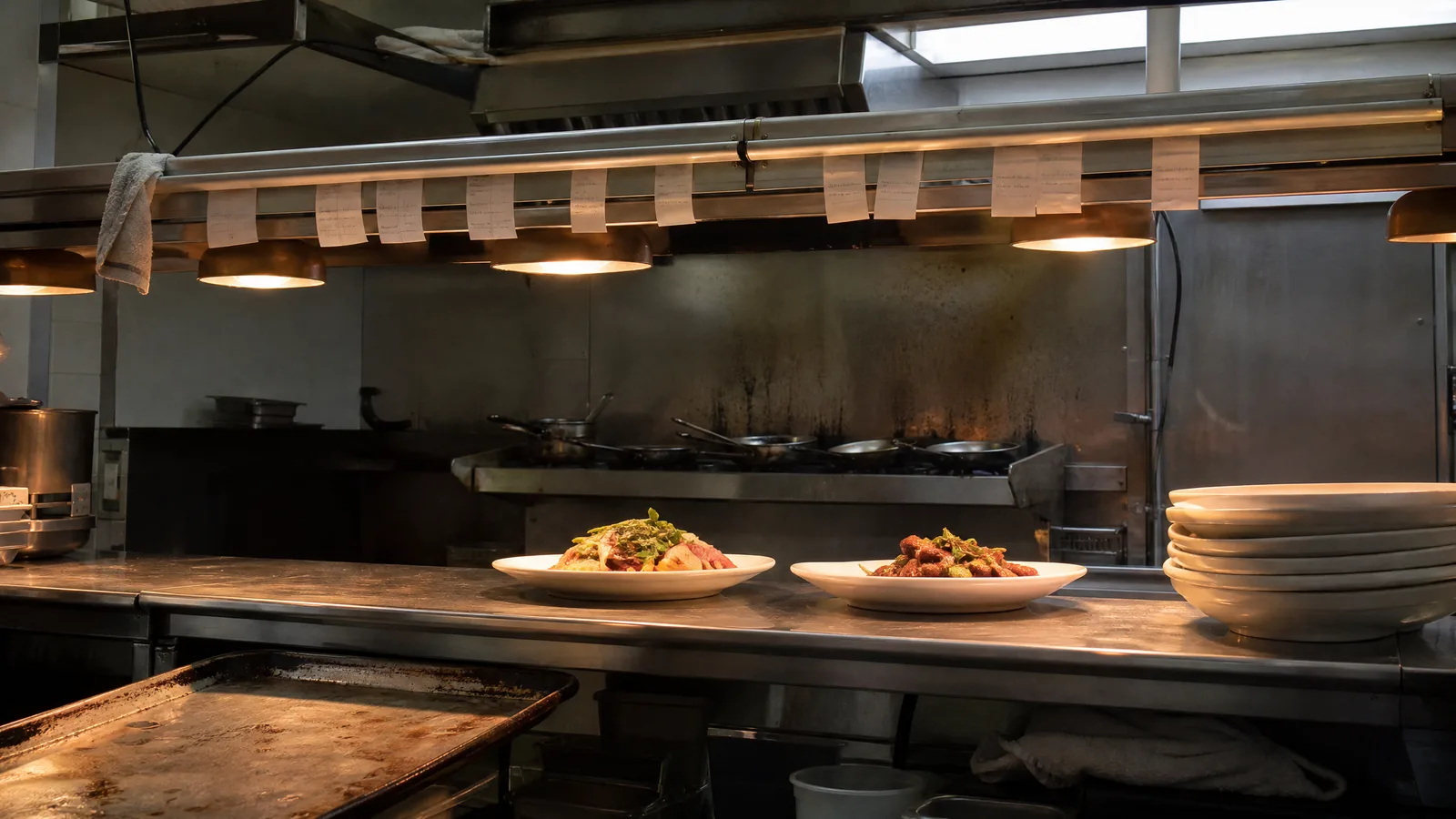
Front of house, back of house, and what covers each
General liability carries the front of house. The NAIC's four categories, bodily injury, damage to others' property, personal injury including slander and libel, and false or misleading advertising, describe the dining room's risks well: the guest who slips, the coat ruined by a dropped tray (NAIC, Insure U: Small Business Insurance). The claims that come off the plate rather than the floor, an allegation that food made someone sick among them, sit differently in a policy, and where they land is a question to resolve with an agent before it matters rather than after. Which hazard and which limit a food claim draws on is taken apart on our restaurant general liability insurance explainer.
The back of house is a property risk with open flame in it. Business property coverage runs from the building through inventory, furniture, equipment, and machinery, owned or leased (NAIC), and in a restaurant the equipment list is long, hot, and expensive. Hood systems, suppression, and fire history are underwriting facts here; expect them in every conversation.
Hiring brings workers compensation, required in nearly all states, though the exceptions are real: Texas leaves it optional for most private employers while California requires it from the first employee. That range is exactly why the requirements conversation belongs on the state pages below.
Packaging, and the two conversations that stay separate
Small businesses commonly package property, liability, and business interruption coverage in a businessowners policy, and the Insurance Information Institute's description of the BOP fits many food operations. It also carries a warning worth reading twice: some businesses, restaurants among them, may be ineligible for a standard BOP because of the risks inherent in the business, and a BOP does not cover workers compensation or professional liability in any case (Insurance Information Institute). Restaurant-specific package programs exist for exactly this reason. Whichever shape the package takes, the principle is the one this site repeats everywhere: a policy covers the operation it was told about, so delivery, catering, a counter-service window, and the bar all belong in the quote conversation. That includes fast food and quick service, which are restaurant risks with the same stack in different proportions.
Two conversations stay separate on purpose. Liquor liability is a legal-exposure topic with its own state rules, and it deserves more than a paragraph, so this site treats it as its own subject on the bar and restaurant insurance page rather than a bullet here. And requirements are a state subject from top to bottom: the FDA publishes a model Food Code, states adopt some edition of it, and counties enforce it (FDA, State Retail and Food Service Codes), so "federally required" is a phrase that should make you suspicious of whoever wrote it.
Your state's rules
Licensing agency, workers compensation posture, and enforcement structure, state by state as pages go live.
Somewhere else? Start at the overview and use the coverage sections above; the stack is the same, the agencies are not.
Three questions this page does not settle have guides of their own: what a restaurant needs, claim by claim, what sets the cost, and which documents actually require coverage.