
Restaurant equipment insurance: breakdown, spoilage, and the walk-in that quits
Property insurance covers your equipment when something from outside damages it, fire above all. It does not cover the equipment failing from the inside: standard property forms exclude mechanical breakdown and electrical damage from artificially generated current. Equipment breakdown insurance is the line written for those failures, and spoilage of the food inside a failed cooler is a sublimited coverage that lives with it.
What coverage a restaurant needs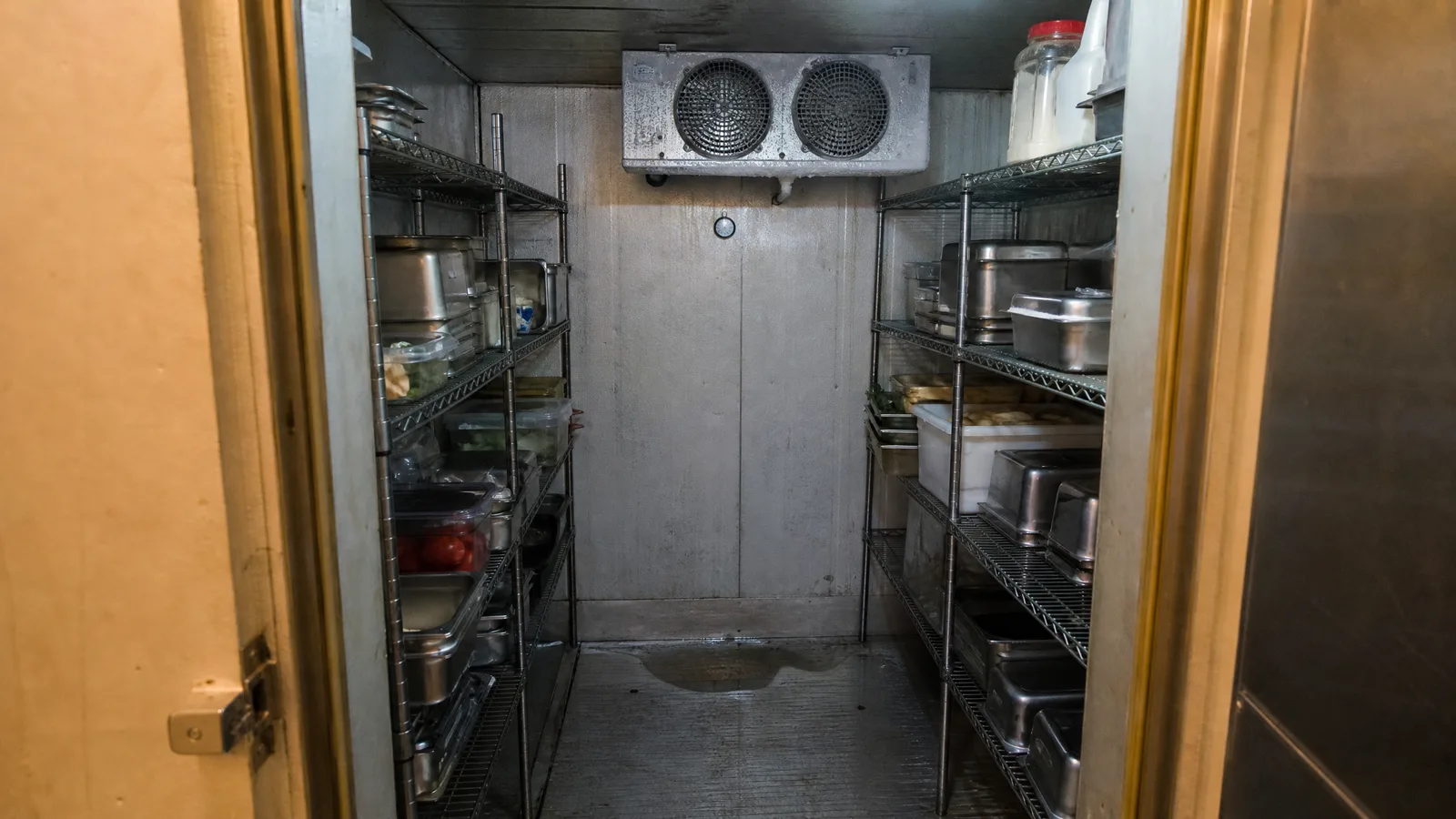
Property covers the outside event; breakdown covers the inside one
Start with what property coverage does. The NAIC lists what business property insurance can include, owned or leased: the building, inventory, furniture, equipment and supplies, machinery, and computers (NAIC, Insure U: Small Business Insurance). A kitchen's equipment list is all of that at once, and a property form responds when an external event damages it: a grease fire in the hood, a burst pipe over the dry storage, a break-in.
Now the carve-out. IRMI's treatment of the standard property form explains that the policy covers loss to equipment caused by an external event such as fire, vandalism, or windstorm, and excludes the internal ones: mechanical breakdown, including rupture or bursting caused by centrifugal force; artificially generated electrical, electromagnetic, or magnetic energy that interferes with an electrical wire, device, appliance, system, or network; and explosion of owned or leased steam boilers, pipes, engines, or turbines (IRMI, Equipment Breakdown, More Than Just Boiler and Machinery). Lightning stays covered under the property form; the exclusion is aimed at the current your own building generates. Read the list against a restaurant and it is a catalog of how kitchen equipment actually dies. Compressors seize. Control boards on combi ovens fry when a circuit surges. A dish machine's booster heater fails. None of that is fire, and none of it is a property claim.
Equipment breakdown insurance is the line for the excluded list. IRMI's definition: coverage for loss due to mechanical or electrical breakdown of nearly any type of equipment, applying to the cost to repair or replace the equipment and any other property damaged by the breakdown, with resulting business income and extra expense loss often covered as well (IRMI, equipment breakdown insurance). It has largely replaced the older boiler and machinery policy, and the Insurance Information Institute still describes it under that name as covering losses from the malfunction of heating, electrical, air conditioning, and other equipment (Insurance Information Institute, commercial package policies). The old name is why some operators think it is about boilers. It is about the walk-in.
Spoilage: the food inside the cooler that failed
Fixing the compressor is the smaller loss. The larger one is the contents. A walk-in that goes down at close on a Friday and is discovered Sunday morning has turned a week of protein and dairy into a disposal problem, and the repair invoice does not touch it. That is what spoilage coverage is for, and it belongs in the equipment breakdown conversation because that is where IRMI places it: among the sublimited coverages to check on an equipment breakdown form, IRMI lists the adequacy of limits for perishable items, with food named first, alongside extra expense, expediting expense, and hazardous substances (IRMI, Equipment Breakdown).
The operative word is sublimited. The perishable coverage on a breakdown form is commonly capped below the policy limit, and the cap is the number to compare with the value of a full walk-in the day before a holiday weekend, not the headline limit on the declarations page. Ask for it by name. Ask, too, whether the form responds only when covered equipment fails or also when the equipment is fine and the utility feed is not, because no published source settles it and the answer varies by form. A cooler that is dark because the grid went down and a cooler that is dark because its compressor seized are different claims, and only an agent reading your endorsement can say whether both are covered.
Expediting expense, on the same IRMI list, is the sleeper for a kitchen: the cost of overnight shipping and overtime labor to get a replacement part in on Saturday instead of Wednesday. Business income, which IRMI notes is often part of the form, covers the revenue those days would have produced. Between the three, a breakdown policy is doing something the property policy was never asked to do.
One bad night, three coverage lines
Put the pieces together on the Friday walk-in. The compressor seizes: mechanical breakdown, excluded by the property form, answered by the equipment breakdown policy's repair or replacement coverage. The food inside spoils: the perishable sublimit on the same policy. The Saturday and Sunday service you ran short or cancelled: business income and expediting expense, if the form includes them. Nothing in that sequence reaches the property policy, and nothing in it reaches general liability, because nobody outside the business was hurt. Now change one fact. The compressor seizes because a grease fire in the hood took out the electrical panel: the fire is the property claim, the walk-in inside it is property too, and the breakdown policy may never be touched. Same cooler, opposite answer, decided by cause.
Where this sits in the program: the fire and hood-system side of the property conversation is on the restaurant business insurance page, and a truck whose generator and refrigeration ride on a vehicle has its own version on the commercial food truck insurance page. Whether breakdown arrives as an endorsement to a package is on the businessowners policy explainer, and the rest of the lines are on the coverage hub.