
Coffee shop insurance, at counter-service scale
A coffee shop carries the restaurant stack at a smaller scale: general liability for a front of house built around hot liquids and a morning rush, property coverage with the espresso machine at the center, and workers compensation for a staff that is often part-time. Cafe, tearoom, espresso bar: the risk shape is the same.
What coverage a restaurant needs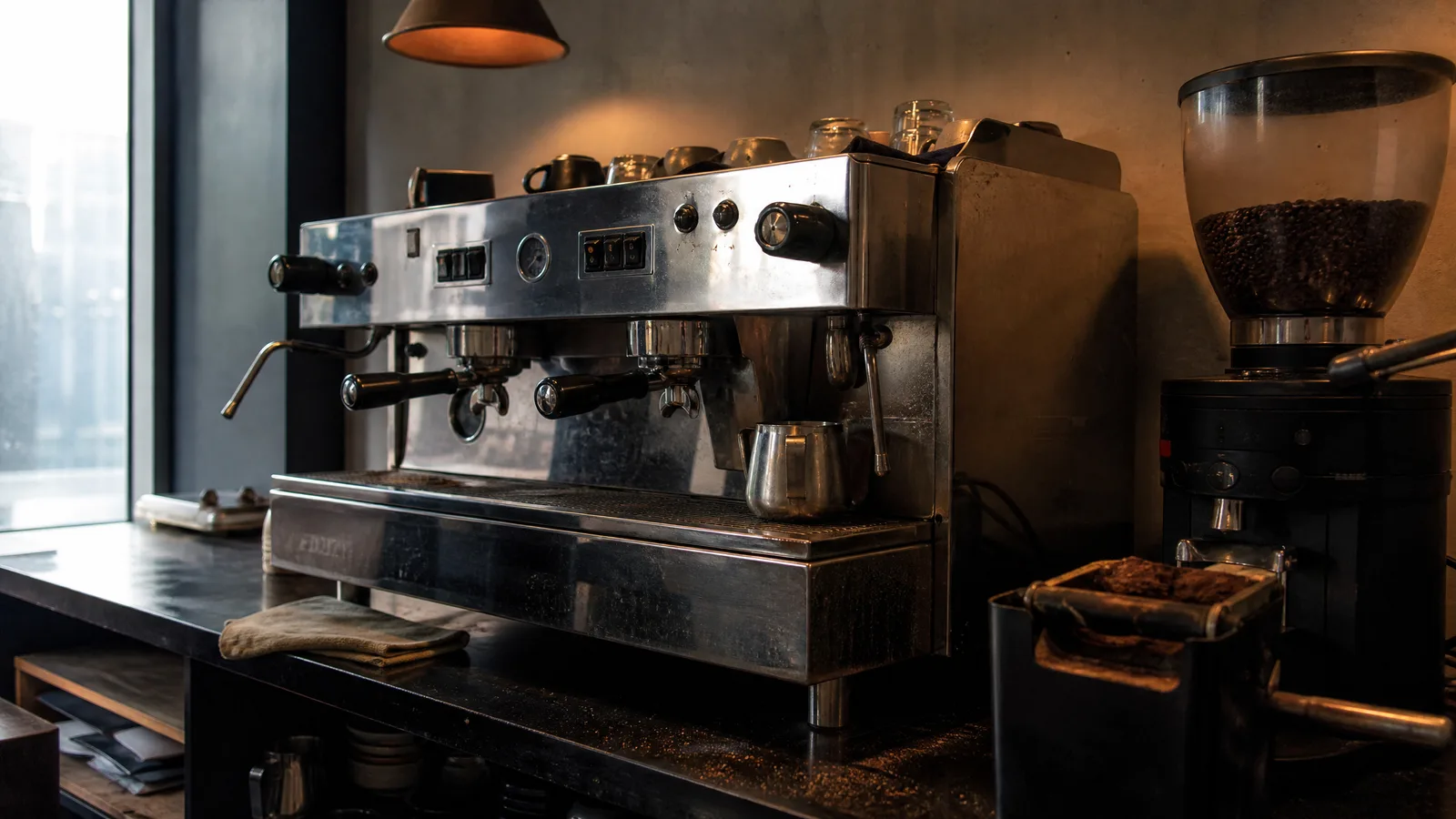
Hot liquids, tight floors, expensive machines
General liability does the front-of-house work: the NAIC's categories of bodily injury and damage to others' property describe the handoff-counter spill, the condiment-bar burn, and the morning-rush slip precisely (NAIC, Insure U: Small Business Insurance). Claims arising from the drink or the food itself sit on the products side of the liability conversation, so ask an agent to walk both halves rather than assuming one policy line answers everything.
The property story is concentrated in a way full kitchens are not: an espresso machine, grinders, brewers, and refrigeration can carry a large share of the operation's equipment value in a few square feet of counter. The NAIC's property categories, equipment and machinery among them, owned or leased, apply directly, and leased machines belong in the conversation explicitly. Counter-service operations of this size often fit the businessowners-policy packaging discussed on our restaurant business insurance page; the more cooking your menu does, the more that full page is your page.
Staffing is the third leg. Cafes run on part-time schedules, and in most states employment is employment: workers compensation is required in nearly all states, with state-specific thresholds worth verifying rather than assuming. The licensing frame is the one this site names everywhere: a state-adopted food code, enforced locally, never a federal mandate (FDA).
Two adjacencies worth knowing: a cafe that caters events inherits the traveling exposure covered on our catering insurance page, and a beverage-led premises with production behind it reads more like our brewery insurance page. Or start at the overview.