
Catering insurance, for a kitchen that travels
A catering business carries the restaurant stack, general liability, coverage for the food and service itself, property, and workers compensation, with two additions the premises business never faces: the exposure travels to every venue you work, and the vehicles that carry it need commercial auto coverage of their own.
What coverage a restaurant needs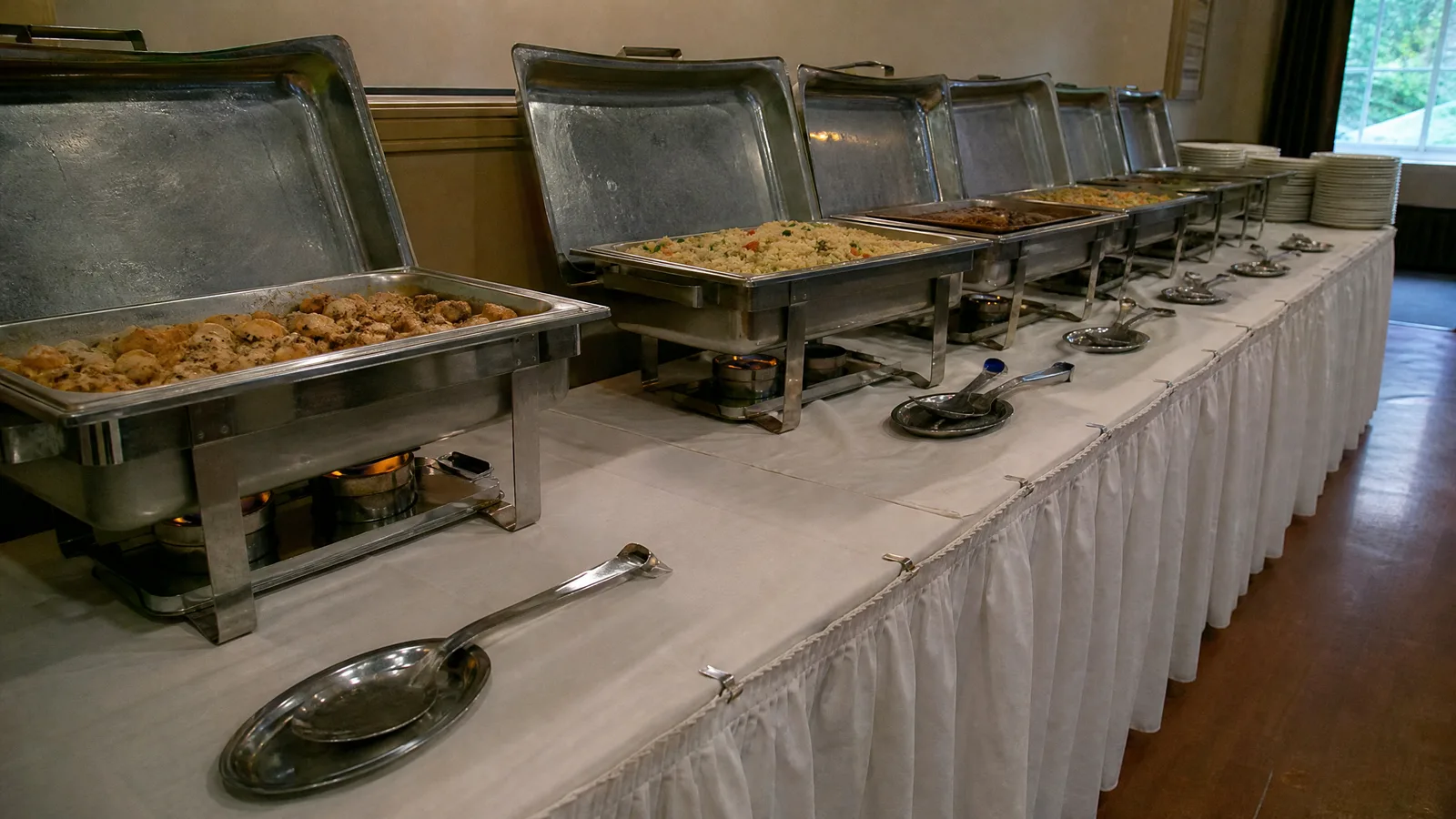
Liability that loads into the van
The coverage split is the one that runs through this whole site: general liability answers for injuries and damage to others' property, the NAIC's premises categories (NAIC, Insure U: Small Business Insurance), while claims arising from the food and service itself sit on the professional and products side, which a bare general liability policy does not fully reach. The full stack walk-through is on our restaurant business insurance page. What catering changes is the geography. Your premises risk is whoever's premises you are working today: a client's home, a rented hall, a corporate lobby. The exposure arrives with the sternos and leaves with the last table.
Venues know this, which is why the certificate of insurance is part of catering operations in a way most restaurants never see. Expect venues to require proof of coverage, often naming them as an additional insured, before load-in. An agent who writes caterers will treat fast COI turnaround as normal; it is worth asking about before you need one on a Friday afternoon.
Food in transit adds the questions a fixed kitchen never asks: holding temperature on the road, service at sites you do not control. Underwriters price the operation you describe, so describe it fully: how far you travel, what you serve, and where the cooking happens versus the finishing.
Vehicles, licensing, and what moves the price
The vehicles are a real coverage line, not a footnote. The NAIC's guidance is direct: a business that owns or leases a vehicle needs commercial auto coverage, personal auto policies may exclude business-related liability, and commercial policies carry higher limits and can extend to rented and employees' vehicles used for the business (NAIC). A delivery van in catering livery is business use every mile it drives. If the rolling kitchen is the whole business rather than the delivery arm, that is its own page: commercial food truck insurance.
Licensing. Catering operations are licensed retail food businesses in the state systems this site documents; Colorado's retail food license and Iowa's DIAL licensing both name catering operations explicitly (see Colorado and Iowa), and the structure everywhere is the state-adopted Food Code enforced locally (FDA). Alcohol service at events is its own licensing and liability territory and deserves its own conversation with your agent and your state's alcohol board.
What moves the price. No figures here, because honest ones depend on the operation. The factors are consistent: staff count and workers compensation posture, vehicle count and radius, the venues and event types you serve, whether alcohol is involved, and claims history. Bring all of it to the quote conversation, or start at the overview if you are still mapping what you run.